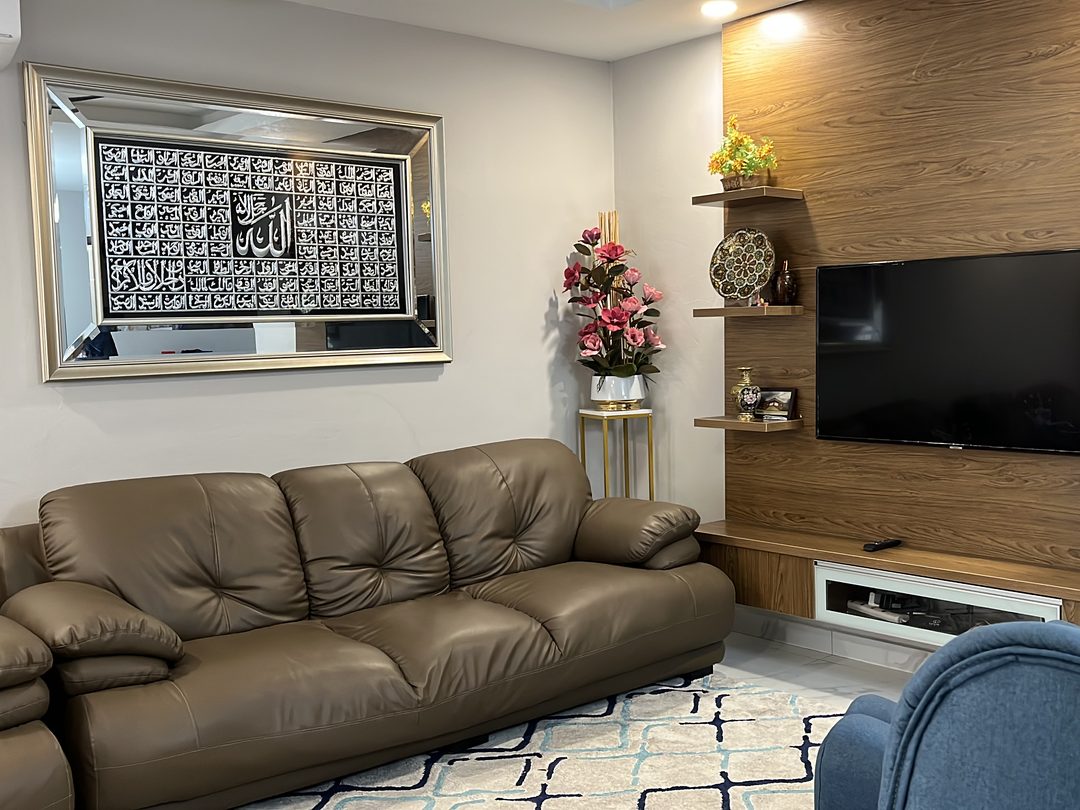
A new house and an old house are not the same renovation job, even when the finished result looks identical. A new house's problems are all in front of you: a layout you don't like, storage you wish you had. An old or inherited house adds a second, invisible layer, because whatever was buried behind the last owner's walls, ceiling and floor screed is now your problem, and it usually surfaces mid-project rather than during the site visit.
If you want us to run this process for you, our renovation service covers the inspection, sequencing and coordination described here as part of the job, and maintenance and repair handles smaller fixes on their own. This page is about what to actually check first, in what order, and why skipping the order is the expensive mistake.
Start with what you can't see: the wiring
Malaysia's Fire and Rescue Department (JBPM) attributes about 60% of house fires nationwide to electrical faults, most commonly unsafe wiring, non-compliant modifications, and appliance loads the original circuit was never sized for. An inherited house that hasn't been touched in twenty or thirty years is exactly the profile this statistic describes: a single overloaded distribution board, extension cords doing the job a proper circuit should, and in some older homes, aluminium conductors rather than copper.
Malaysian wiring standards do not permit aluminium conductors in domestic installations; conductors have to be copper. If an inspection finds aluminium wiring, a full rewire is the safer call rather than a partial patch. Warning signs worth checking for before you commit to a scope: breakers that trip without a clear cause, sockets or switches that feel warm, a burning smell or blackened marks around a switch plate, and visibly aging insulation. Whatever the finding, the work itself has to go to a wireman licensed with Suruhanjaya Tenaga (the Energy Commission), not a general handyman.
| Scope | Typical cost (terrace house) |
|---|---|
| Partial rewire (specific circuits) | RM1,000 – RM5,000 |
| Full rewire, single-storey terrace | RM5,000 – RM10,000 |
| Full rewire, double-storey terrace | RM8,000 – RM15,000 |
Roofing, and the asbestos question older roofs raise
Houses built between the 1950s and the 1980s are the ones most likely to carry asbestos-cement roofing shingles, along with some older cement wall panels and ceiling tiles. Malaysia has never passed a law banning asbestos in private buildings; the ban only covers government-built schools, clinics and hospitals since 1999, and all government buildings since 2005, and only chrysotile (white asbestos) is still permitted for import. An intact asbestos sheet sitting undisturbed is not the danger. Cutting, drilling or dry-sanding one during a re-roofing job is, because that is what releases fibres into the air.
If your roof or ceiling predates the 1990s, ask before anyone touches it. A specialist familiar with asbestos-cement removal handles this differently from a standard re-roofing crew: wetting the material before cutting, sealed disposal, and no power tools that generate dust. There is currently no public registry to check a property against, so treat any pre-1990s roofing material as asbestos-cement until proven otherwise, and get it assessed before the rest of the roof scope is priced.
Water: old pipework and waterproofing, before the wet areas get tiled
Galvanised steel or old PVC supply and waste lines are common in houses of this age, and corrosion inside a pipe doesn't show up until it fails, usually as a leak inside a wall or under a floor slab you've just finished. The same logic applies to waterproofing: a bathroom, kitchen wet zone or external wall that has never had its membrane redone is a bet that it will hold for another renovation cycle. It's a bet that loses often enough that redoing waterproofing on any wet area being renovated is standard practice, not an upsell.
| Item | Typical cost |
|---|---|
| Waterproofing, per affected wet area | RM1,500 – RM8,000 |
| Termite treatment (baiting system) | RM800 – RM2,500 |
| Termite treatment (soil/termiticide drilling) | from RM2,800 |
Termites and structural timber
Roof timber, door and window frames, and built-in carpentry from decades ago are all termite risk in a Malaysian climate. Most pest control operators inspect for free and quote treatment afterward, so there's no reason to skip this step even on a modest scope. Damage found late, after finishes are already in, means removing new work to get at the timber underneath, which is the same expensive pattern as discovering bad wiring behind a freshly plastered wall.
Structural review, especially if anything was ever added on
Older landed houses accumulate informal changes over the decades: a covered patio, an extended kitchen, a room built over what was once a car porch, often without ever being submitted to the local council. If your renovation plan builds against or connects to one of these additions, it surfaces the moment your own plans go in for approval, and it's worth knowing that before you commit to a layout, not after. A qualified architect or engineer reviewing the structure at this stage also catches load-bearing walls that a previous owner quietly modified. For what actually needs council or management approval and what the penalties are for skipping it, see our guide to renovation approval in the Klang Valley.
The order that actually saves money
Everything above shares one rule: structure and roof first, then what runs behind the walls and under the floor (wiring, plumbing, waterproofing), and finishes last. It's tempting to start with the visible, satisfying part, new tiles, a repainted wall, but every one of those finishes has to come back off if what's underneath fails an inspection later. Checking first costs a site visit. Checking last costs a redo. This is the same principle behind what to renovate first after getting your keys, just with a longer list of things that can be hiding.
Budget a 10–15% contingency on top of the quoted scope. Old wiring, a hidden leak, or termite damage behind a wall you haven't opened yet are the norm on a house this age, not the exception, and a contingency is what keeps one of those findings from stalling the whole project.
Sources
The 60% electrical-fault figure and its named causes are from JBPM director-general Datuk Seri Nor Hisham Mohammad, reported by The Star and Bernama. Copper-only conductor requirements and rewiring signs and costs are drawn from WiringRumah's guide to old house rewiring and Prime Electrician's guide to outdated wiring. Asbestos legislation, the 1950s–1980s construction window and the lack of a private-building ban are drawn from the Consumers Association of Penang's reporting on Malaysia's asbestos regulation gap. Waterproofing and rewiring cost ranges are drawn from Renowise's terrace house renovation cost guide. Termite treatment methods and costs are drawn from Recommend.my's pest control price guide.
Read next: What to renovate first after getting your keys · What needs approval before you renovate · What a renovation actually costs in Malaysia · How long a renovation really takes · renovation · maintenance & repair