The number, and the number underneath it
Two condos in the same building, the same size, the same layout. One owner spends RM60,000 and moves in. The other spends RM150,000 and is still waiting on the plumber. The difference usually isn't taste. It's what was waiting behind the walls on the day each owner collected the keys.
That's why the most useful 2026 guide to condo costs doesn't sort by size at all. It sorts by the state the unit is in. For a typical 1,000 sq ft Klang Valley condo:
| Starting point | Typical scope | Cost, 1,000 sq ft |
|---|---|---|
| New unit from the developer | Carpentry, flooring, painting, lighting, air-conditioning | RM50,000 to RM80,000 |
| Mid-range subsale | The above, plus partial rewiring and a bathroom refresh | RM80,000 to RM120,000 |
| Older subsale, full overhaul | The above, plus full rewiring, re-piping, waterproofing and hacking | RM120,000 to RM180,000 and up |
At the edges, a light cosmetic refresh can sit near RM30,000 to RM50,000, and premium custom work can pass RM250,000. Per square foot, the same guide puts mid-range work at roughly RM80 to RM150.
These are indicative market ranges, not a quote. They come from Malaysian sources published in 2026 and listed at the bottom of this page. Plan your renovation and we'll give you a scoped figure instead of a range.
Those numbers cover the same ground as our general renovation cost guide. But a condo has a second cost structure sitting on top of the first, and it has nothing to do with tiles or paint. It comes from living inside a building you share with other owners, one management, and a set of rules you didn't write. The Strata Management Act 2013 behind those rules covers Peninsular Malaysia and Labuan, so the pattern holds well beyond KL and Selangor, even where the ringgit figures shift. Sabah and Sarawak have their own strata laws.
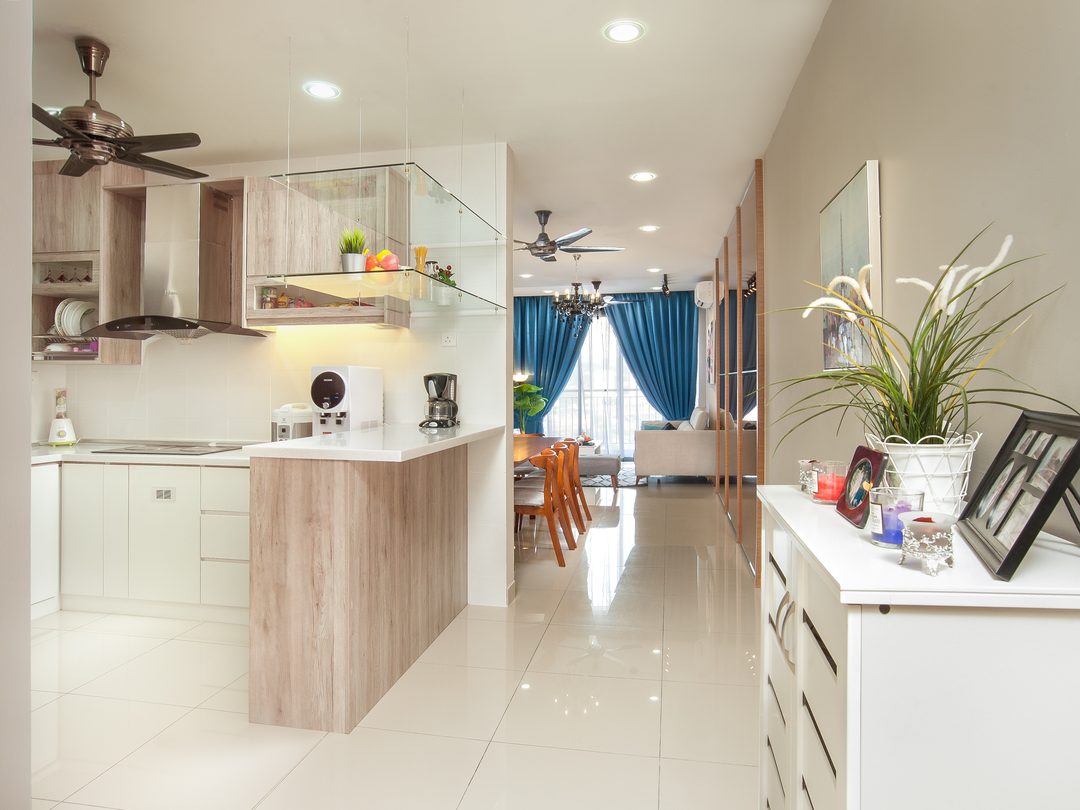
Renovating just the kitchen rather than the whole unit? A standard condo kitchen, with cabinets, countertop, sink, tap and backsplash, commonly runs RM18,000 to RM38,000 on its own. Our kitchen renovation cost breakdown has the cabinet-by-cabinet numbers.
Why strata living has its own arithmetic
A terrace house answers to the local council for structural work and to nobody for anything cosmetic. A condo answers to its Joint Management Body or Management Corporation for almost everything. That's not just house rules: the statutory by-laws made under the Strata Management Act say no renovation works may start without the management's prior written approval.
Written approval comes first, before a single tile is lifted. Buildings commonly want a floor plan and a scope of works, and many check who your contractor is. Skip this step and the risk isn't a fine on paper. Work can be stopped on the spot, and contractors caught working without approval can be blacklisted from the building, which halts the project mid-way regardless of what you've already paid them.
A refundable deposit sits alongside the approval. It's commonly RM1,000 to RM5,000, sometimes more in higher-end developments, held against damage to lifts, corridors and other common property. You get it back at the end if nothing is chipped, scratched or leaked. Budget it as cash that's temporarily unavailable, not as a cost you lose.
Working hours are shorter than you think. Many KL and Selangor condos restrict noisy work to weekdays, commonly 9am to 5pm. Some allow a short Saturday window and some don't, and some limit hacking to a narrower midday slot. A five-day trade week on a landed house can shrink to three and a half days in a condo, which stretches the timeline even when the crew size doesn't change.
Drilling near conduits and pipes is banned outright. The statutory by-laws prohibit hacking or drilling within 300mm of concealed pipes and electrical conduits, and require contractors to use a metal detector first, because a mis-drilled hole in a shared wall doesn't just cost you money. It can cut power or water to a neighbour.
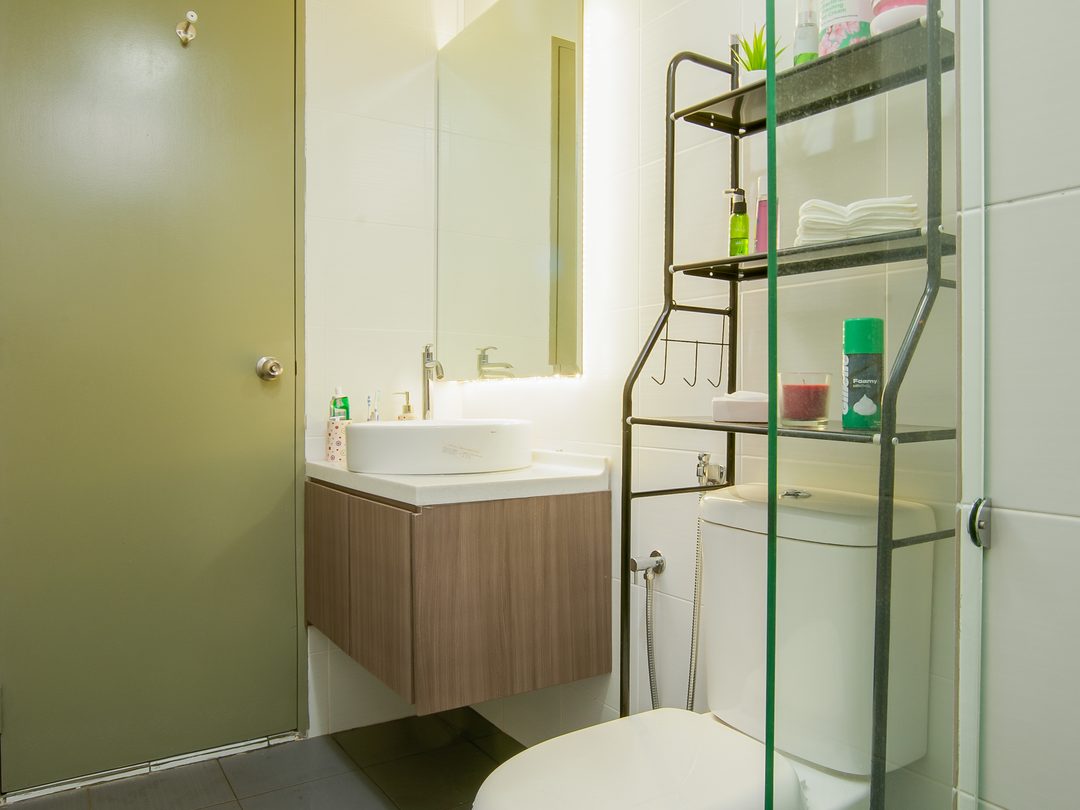
Wet areas usually stay where the developer put them. Soil stacks, floor traps and drainage lines run vertically through every unit in the stack, so moving your kitchen sink or bathroom to another wall is rarely as simple as in a landed house. Shifting plumbing and sewerage needs approval from both the management and the local authority. Waterproofing gets particular scrutiny for the same reason: a leak from your unit lands in your neighbour's ceiling. Change the floor finish in a wet area and the by-laws require a new damp-proof membrane, turned up the walls by at least 150mm, and many managements ask for a waterproofing certificate before signing off a bathroom.
What ambushes people who have only renovated a landed house before
If your last renovation was a terrace house, these are the differences that catch people out.
- The service lift has a booking calendar. Large deliveries and debris removal need it reserved in advance, and it has to be padded before use. Block the main passenger lift with bags of cement and you've found the fastest way to lose your renovation permit.
- Debris goes down, not out. Every bag of hacked tile and old cabinetry rides the service lift to the ground floor, which is slower, and costs more, than a lorry backing up to a terrace house gate.
- The timeline moves with the hours. A four-week landed job of similar scope can take six in a condo, purely because the crew is only allowed on site for part of each day.
- A second approval can appear mid-project. If a wet area needs to shift, the local authority's approval joins the building's own, and that's a separate application with its own waiting time.
- The deposit may not be the only charge. Ask your management whether it charges any other fees, such as for worker passes or lift use, before you total the budget.
A condo quote that doesn't mention the deposit, the service lift or the working hours hasn't priced your actual project. It has priced a generic renovation and hoped the building rules wouldn't matter.
How to read a condo quote so it can't ambush you
- Ask whether the deposit and lift booking are included in the quote or billed separately. Both are real costs, even though neither buys you a finish.
- Ask what happens if the management rejects the first submission. Resubmissions are common, and a contractor who has done this before will already have a plan for it.
- Confirm the working-hours assumption behind the timeline. A four-week estimate built on landed-house hours won't survive a condo's schedule.
- Ask directly whether your wet areas are moving. If they are, confirm who's applying for the local authority's approval and how long it usually takes in your area.
- Get the waterproofing method and warranty in writing, not just a mention that it will be done. This is the line that protects the ceiling below you.
Our condo renovation and design and build services both start the same way: a site visit, a scope written down before a price is attached to it, and the strata paperwork handled as part of the project rather than left for you to chase between quotes.
How we handle the strata layer
We've submitted enough JMB and MC applications to know the paperwork isn't a formality you can rush. We prepare the floor plan and scope submission, confirm the deposit and any building-specific fees before they surprise you, and build the working-hour restrictions into the schedule we hand you, not into an excuse we give you later. If your wet areas need to move, we tell you before you sign, because that's a different approval and a different price, and it should never be a surprise three weeks in.
Outside the Klang Valley, we still take on the design side on its own: a layout plan, 3D design and consultation, handed over for you to build with a contractor local to you.