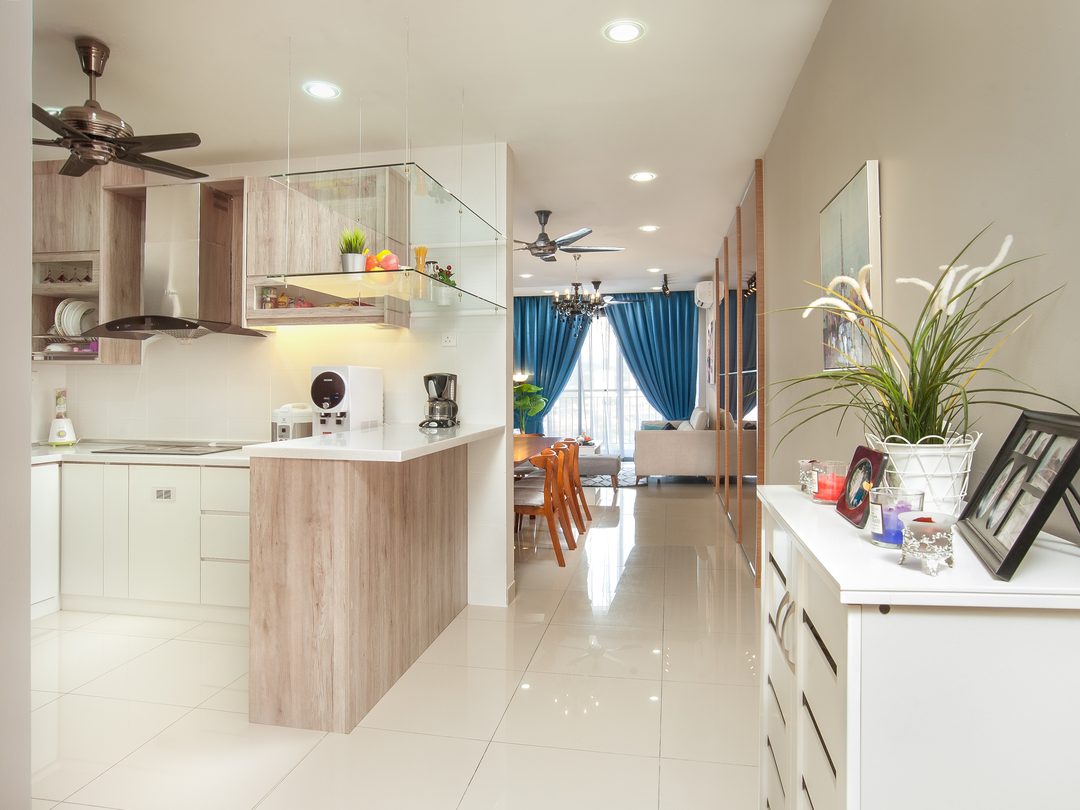
What Kompacplus actually is
Kompacplus is a compact laminate: layers of kraft paper soaked in resin, compressed under very high heat and pressure into a thin, dense panel, typically around 6mm thick. That construction is closer to a high-pressure laminate than it is to stone. It's non-porous, and it resists fire, water and steam well enough that it's marketed heavily for kitchens and bathroom vanities, not just countertops.
The comparison
| Material | What it's made of | Typical thickness | Heat tolerance |
|---|---|---|---|
| Kompacplus | Kraft paper layers compressed with resin | ~6mm | Good for everyday use; resin content means it doesn't match sintered stone against direct, sustained heat |
| Sintered stone (e.g. Dekton) | Mineral powders sintered under heat and pressure, no resin | 12mm to 20mm | Roughly 300°C directly; a hot pan can go straight down without a trivet |
| Quartz | ~90 to 94% ground quartz crystal bonded with resin | 20mm to 30mm | Practical ceiling around 150 to 200°F; the resin binder discolours or softens above that |
These are indicative comparisons, not a quote. Sintered stone and quartz figures are drawn from our full quartz vs sintered stone comparison. Malaysian Kompacplus quotes are commonly given per running foot rather than per square foot, and vary more between installers than the other two, so a blanket price range would be misleading here. Plan your renovation for a figure scoped to your kitchen.
Where Kompacplus genuinely wins
Thin and light is the whole pitch. Because the panel doesn't carry the weight of a stone slab, it can often be installed directly over an existing countertop, which skips the cost, mess and downtime of ripping the old surface out first. For a kitchen refresh on a tighter timeline or budget, that's a real advantage neither quartz nor sintered stone offers.
Where it doesn't compete
Against a wok burner, sintered stone's lack of resin content puts it in a different category entirely, Kompacplus handles everyday kitchen heat fine but isn't rated for the same direct, sustained exposure. And because it reads visually closer to a laminate than a natural stone surface, buyers choosing purely on how the finish looks under close inspection tend to land on quartz or sintered stone instead.
Which one for your kitchen
Sintered stone for a wet kitchen with direct wok heat or real sun exposure. Quartz for an enclosed, air-conditioned kitchen where colour range and price matter more than extreme heat tolerance. Kompacplus where a thin, light panel that can go over an existing surface solves a specific budget or renovation-speed constraint the other two don't. None of the three is a universally "better" choice, they solve different problems.
Read next: quartz vs sintered stone · sintered stone kitchen countertop guide · kitchen renovation cost