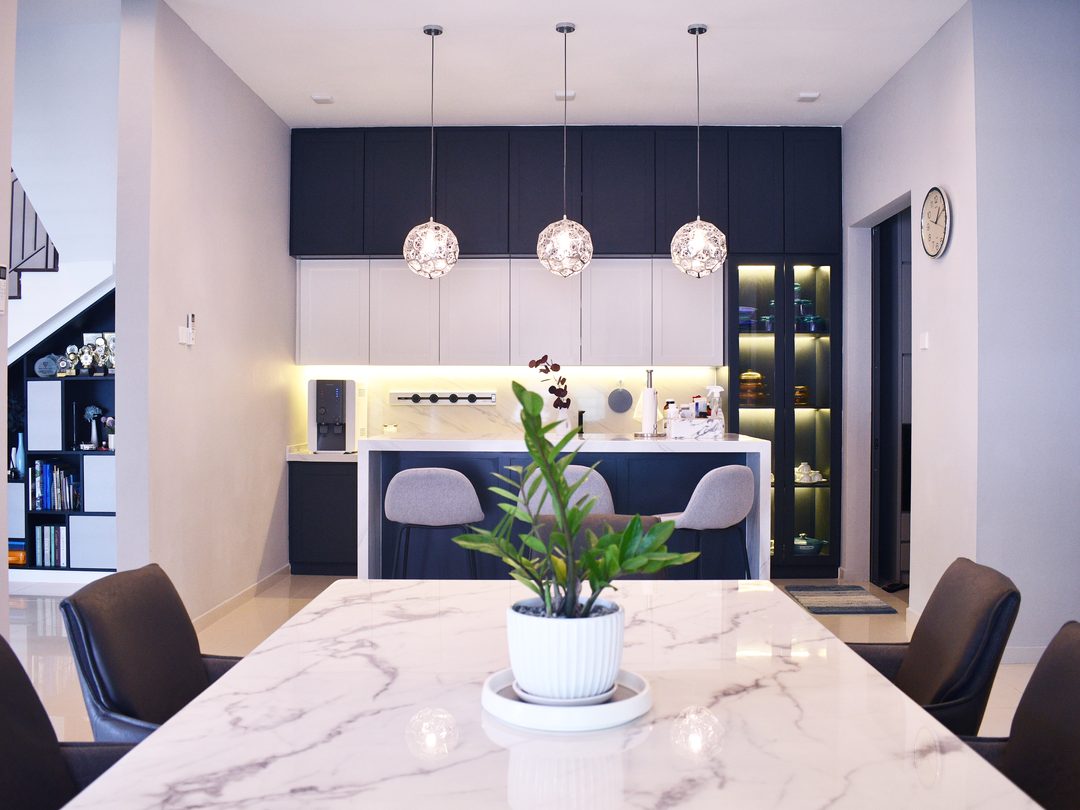
What it's made of, and why that matters
Sintered stone starts as mineral powders, largely the same raw materials found in natural stone, pressed under extreme heat and pressure until they fuse into a single dense slab. That process, sintering, is where the name comes from. There's no resin binder holding the particles together the way there is in engineered quartz, which is the whole reason the two materials behave so differently under heat and sun. For a full side-by-side against quartz, granite, solid surface and tile, see our quartz vs sintered stone comparison.
Why it suits a Malaysian wet kitchen
Two things about a Malaysian kitchen push people toward sintered stone specifically: wok cooking, which throws direct, sustained heat at whatever the pan touches down on, and, for anyone with a semi-outdoor wet kitchen, UV exposure. Sintered stone tolerates roughly 300°C directly, so a pan straight off a high wok burner doesn't need a trivet first. It's also UV-stable, which matters for a wet kitchen with a roof but no walls, where quartz's resin binder would eventually yellow.
Thickness and finish
Kitchen countertops commonly use 12mm to 20mm slabs. Thinner slabs cost less and work well as cladding or laid over an existing surface; thicker slabs give a heavier, more substantial edge without needing a built-up mitred edge to fake the thickness. Finish options run from matte and honed to a full gloss polish, and increasingly to textured finishes that mimic natural stone or concrete more convincingly than a printed laminate ever could.
These are indicative market ranges, not a quote. Premium sintered stone brands typically run RM248 to RM450 or more per square foot in 2026. Plan your renovation and we will give you a scoped figure for your kitchen instead of a range.
Fabrication and installation
This isn't a material a general contractor should improvise on. The slabs are heavy, hard on standard cutting tools, and unforgiving of a badly cut seam or an unsupported overhang, sintered stone doesn't flex the way some other materials will to absorb a fabrication mistake. A fabricator who works with it regularly, not just with stone in general, is worth insisting on, and worth asking about directly before you sign anything.
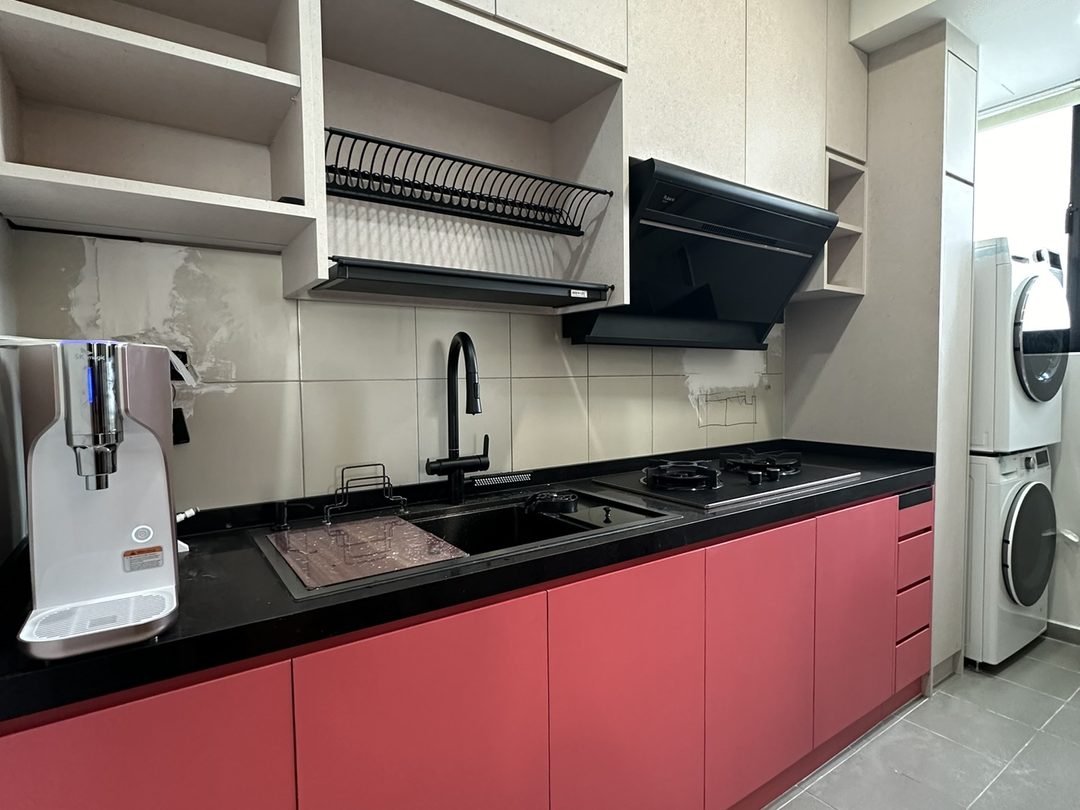
Maintenance: the part nobody has to think about
It's non-porous straight from the factory, so there's no sealing at installation and no resealing schedule to keep track of later, unlike granite. Day to day, it's a wipe-down. That's a real point in its favour if you've lived with a natural stone counter that needed periodic resealing to keep staining acids and turmeric out of the surface.
Is it worth it over quartz?
If your countertop sits beside a wok burner or gets real sun, yes, the heat and UV tolerance solve problems quartz genuinely has. If your kitchen is fully enclosed, air-conditioned, and doesn't see high sustained heat, quartz's lower price and wider colour range make it the more practical choice for most Malaysian homes. Our full comparison walks through the heat, stain and price differences in detail, and our Kompacplus vs sintered stone vs quartz guide covers where a compact laminate fits into the same decision.
Read next: quartz vs sintered stone · Kompacplus vs sintered stone vs quartz · kitchen renovation cost