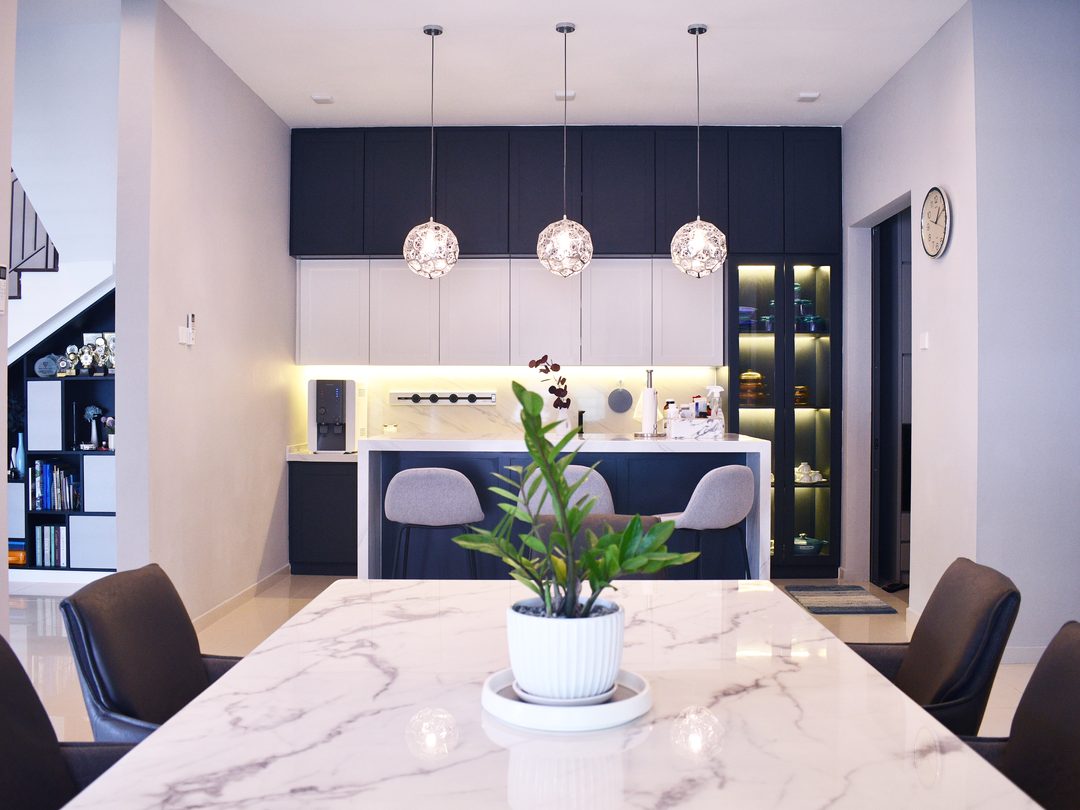
The material choice a wok makes for you
A Malaysian kitchen is not a showroom kitchen. Wok cooking puts real heat directly onto the counter surface next to the stove, turmeric and belacan stain anything porous within minutes, and a wet kitchen sees standing water and oil splatter daily. The five common countertop materials handle that combination very differently, and the differences are specific enough to change which one is right for your kitchen.
The comparison
| Material | Heat resistance | Stain resistance | Price band (2026, per sq ft) |
|---|---|---|---|
| Quartz | Practical ceiling around 150 to 200°F before the resin binder discolours or softens; damage is usually permanent | Non-porous, resists most stains without sealing | Entry RM110 to RM160, mid-range international brands RM280 to RM325, premium collections RM342 to RM819 |
| Sintered stone (e.g. Dekton) | Handles roughly 300°C directly, hot pans can go straight on the surface without a trivet | Non-porous, does not react with common kitchen acids, wine, vinegar or tomato sauce | Premium tier typically RM248 to RM450+ |
| Granite | Natural stone, handles direct heat from wok cooking without damage | Porous unless sealed; unsealed granite stains permanently from oil and curry, especially light colours | RM15 to RM250+, driven mostly by rarity and slab origin |
| Solid surface (e.g. Corian) | Poor; contact with hot pans can crack or burn the surface | Non-porous and resists stains and bacteria well | RM75 to RM500, depending on brand and finish |
| Tile | The tile itself resists heat and scratches well | Tile resists stains, but the grout between tiles absorbs turmeric and oil readily and needs regular resealing | RM5 to RM200+ depending on tile grade |
These are indicative market ranges, not a quote. They are compiled from Malaysian sources published in 2026 and listed at the bottom of this page. Plan your renovation and we will give you a scoped figure instead of a range.
Considering a thin compact laminate instead of stone? See how Kompacplus compares to both. Want the full picture on sintered stone specifically, brands, thickness, fabrication? Read our sintered stone countertop guide.
Heat: the one place sintered stone genuinely wins
Quartz is an engineered material, crushed stone bound together with resin, and that resin is the weak point. Once exposed to sustained or intense heat, the pigments and resin near the surface can discolour, yellow, or develop dull patches where the surface texture has been disrupted. That damage does not polish out. In a Malaysian kitchen, the danger zone is the stretch of counter right beside the wok burner, exactly where a hot wok gets set down between stir-fries.
Sintered stone contains no resin or organic binder at all, it is compressed and fired at extreme temperature, which is why it can take a pot straight from the stove without a trivet and tolerates roughly 300 degrees Celsius without scorching, cracking or discolouring. Granite, being unaltered natural stone, also handles direct wok heat well. Solid surface is the opposite case: it is the material most likely to crack or burn from a hot pan, and needs a trivet used consistently.
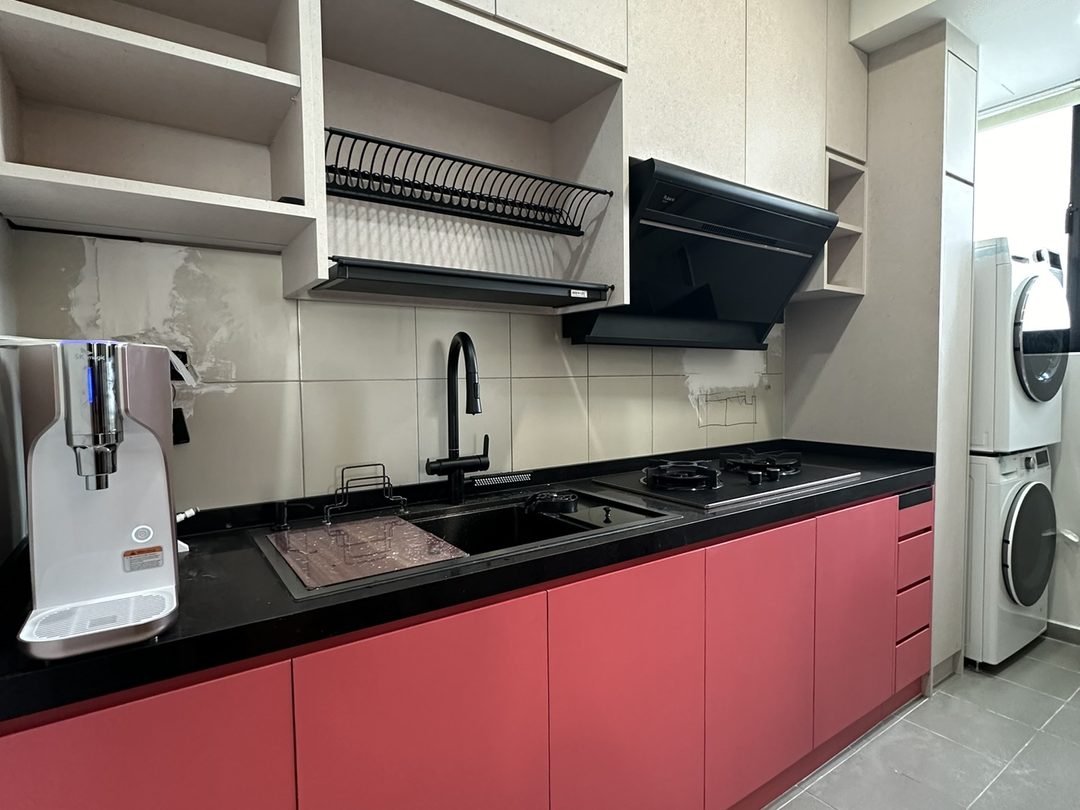
Stains: turmeric is the real test, not wine
Every marketing page tests stain resistance with wine and coffee. A Malaysian kitchen's actual stress test is turmeric, curry paste, soy sauce and belacan, and the difference between a porous and a non-porous surface shows up fast.
Quartz and sintered stone are both non-porous and resist these stains without any sealing. Sintered stone specifically does not react chemically with common household acids, so lemon juice, vinegar and tomato-based sauces leave no surface change. Granite is where the trade-off appears: it is naturally porous, and without proper sealing, oil and curry can leave permanent yellow or brown marks, especially on lighter-coloured slabs. Sealed and maintained, granite performs well, but that maintenance step is not optional the way it is for quartz or sintered stone.
Tile sits in an odd middle ground. The tile surface itself resists stains and scratches, but the grout lines between tiles are porous and absorb turmeric and cooking oil readily, a genuine problem in an active Malaysian kitchen. Grout needs regular cleaning and periodic resealing, and it will still discolour over time no matter how careful the maintenance is.
Seams, thickness and the practical detail nobody asks about upfront
Slab-based materials like quartz and sintered stone come in standard sizes, commonly 15mm or 20mm thick for countertop use, and a single run of counter usually needs no seam if it fits within one slab. Larger islands or L-shaped layouts typically need at least one join. Sintered stone is increasingly offered in large-format slabs specifically to reduce visible seams on big islands, which matters if a continuous, unbroken surface is part of the design brief. Granite and solid surface follow similar sizing logic; tile, by definition, is made entirely of small seams (the grout lines), which is the honest way to think about its maintenance profile rather than an occasional inconvenience.
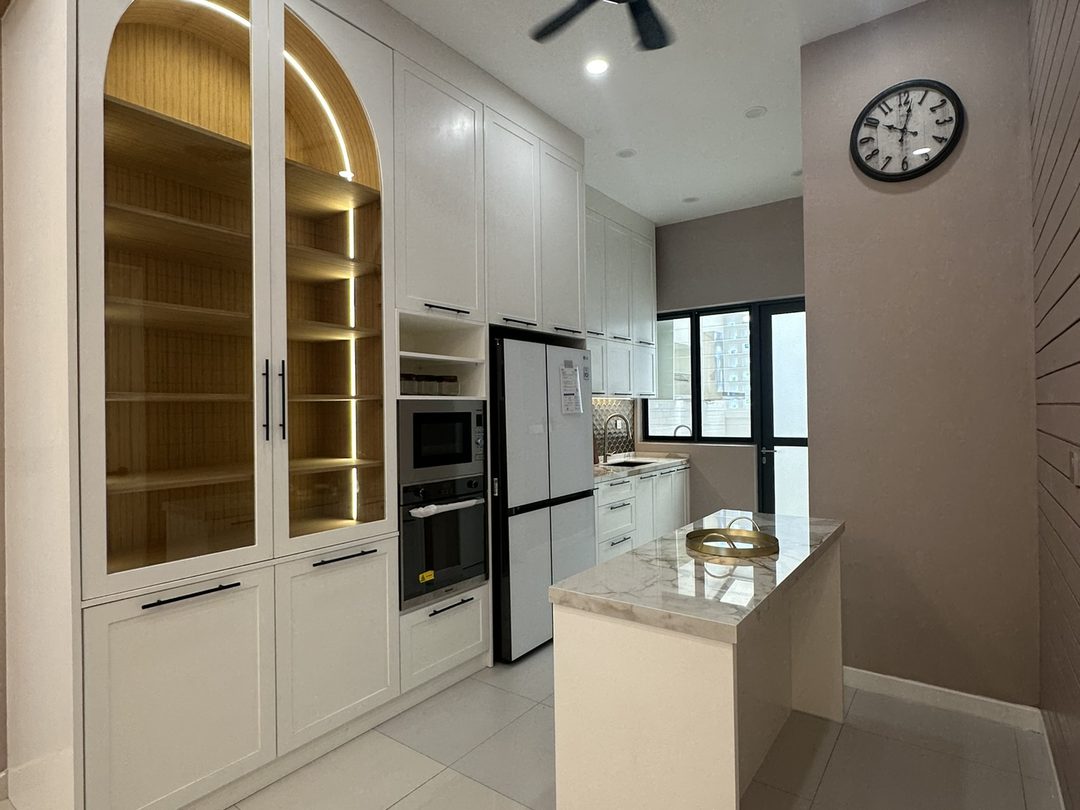
Maintenance and repair: what happens when something goes wrong
None of these materials are indestructible, and the honest question is what happens after the first mistake, not just whether it happens.
Quartz recovers reasonably well from small accidents. A stone technician can fill a corner chip under about an inch wide with colour-matched resin, and surface scratches or hairline cracks confined to the top layer are commonly repairable. Seams are filled with a quartz-compatible resin or epoxy, so a competent installer can keep a join close to invisible on day one, though a seam that opens up later is a redo job, not a touch-up. Day-to-day, quartz asks for almost nothing: wipe with mild soap and water, and because it is fully non-porous there is no moisture penetration and no mould risk, a genuine advantage in Malaysia's humidity.
Granite's maintenance is a recurring cost most quotes leave out. Because it is porous, it needs resealing roughly every one to two years to keep resisting moisture, staining and mould. Skip that, and in Malaysia's 70 to 90 percent year-round humidity, an unsealed granite counter can develop dark spots or bacterial growth along seams and edges, not a cosmetic issue but a hygiene one on a food-prep surface. Sintered stone, being non-porous like quartz, needs no sealing at all and shares quartz's low-maintenance profile, with the added benefit of a higher heat ceiling. Solid surface has one genuine advantage here: scratches and minor burns can often be sanded and buffed out, since the material is solid colour through its thickness, something none of the stone-based options can do.
Which one is honestly right for a wet kitchen
For a genuine wet kitchen with a wok burner, granite or sintered stone are the materials built for the job, one through natural heat tolerance, the other through engineered heat tolerance plus zero porosity. For a dry kitchen or a kitchen where the wok station is on a separate stove or hood entirely, quartz's lower price point and wide colour range make it the sensible default, as long as a trivet habit comes with it. Solid surface suits a bathroom vanity or a low-heat prep counter better than a stove-adjacent kitchen run. Tile can look good and cost little, but budget the grout maintenance honestly before choosing it for a busy kitchen renovation.
Sources
Quartz and sintered stone pricing for Malaysia is drawn from Sinno Stone's 2026 price guide and Walton's sintered stone vs quartz comparison. Heat resistance specifications for Dekton sintered stone versus quartz are from Rockwood Stone and Cosentino's Dekton countertop page. Quartz heat damage mechanics are from MSI Surfaces. Granite and solid surface pricing and porosity notes are from Outbox Design's quartz vs granite guide and Solid Surface Malaysia's pricing page. Tile countertop grout maintenance is from Free Malaysia Today's countertop guide. Slab thickness and seam details are from Paradigm Surfaces' slab thickness guide. Repair and resealing details are from SlabWise's quartz repair guide and Outbox Design's quartz vs granite guide. Ranges vary between sources and none replaces a scoped quote for a specific kitchen.
Read next: what a sintered stone countertop actually is · Kompacplus vs sintered stone vs quartz · Which renovation materials survive a Malaysian home · Plaster ceiling vs skim coat, and when the cheaper one is fine · Paint colours for Malaysian homes in 2026 · kitchen renovation