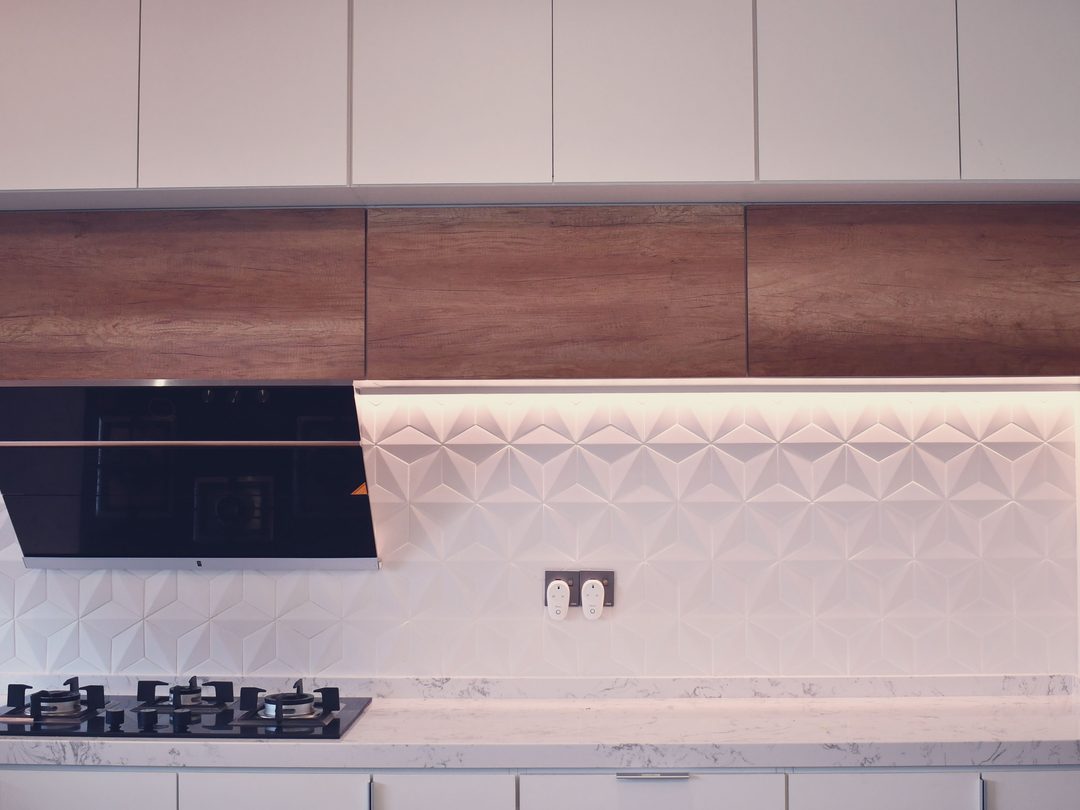
The climate is the material spec, not the finish
Every renovation guide written for a temperate market assumes the same baseline: seasonal humidity, occasional damp, timber that stays roughly the size it was cut. None of that holds in Klang Valley. Relative humidity sits above 70 percent most of the year, monsoon rain drives water into places a UK or Australian spec sheet never anticipated, and termites treat untreated timber as a food source, not a design material.
That changes which material wins in each category, and it is why the cheapest option on a quote is sometimes the right one and sometimes a slow-motion mistake. The rest of this guide goes room by room, material by material, with the actual behaviour under Malaysian conditions and the 2026 price ranges published across local suppliers.
Boards: what survives behind the cabinet door
Carpentry is usually the largest line in a renovation budget (see our renovation cost guide for how that budget breaks down), and the board behind the laminate is the single biggest humidity decision in the house.
| Board | How it behaves in Malaysian humidity | Where it belongs |
|---|---|---|
| Particle board (chipboard) | The weakest option. Standard particle board can swell up to about 12 percent when it takes on moisture, and once it swells it does not recover. | Dry, low-humidity built-ins only. Keep it out of kitchens and bathrooms entirely. |
| Standard MDF | Moulds and finishes smoothly, but swells and bubbles the moment water sits on it. | Bedrooms, living rooms, feature walls, anywhere away from water. |
| HMR board (moisture-resistant MDF) | Resin-treated to resist swelling and humidity. The standard specification for Malaysian kitchen cabinets when paired with a properly sealed laminate edge. | Kitchen carcasses, wardrobe carcasses in humid rooms. |
| Plywood | Cross-laminated veneers make it stronger and more dimensionally stable than MDF or particle board under humidity. | Structural carcass work, load-bearing shelving, cabinet backs. |
| Marine / moisture-resistant plywood | Treated specifically for sustained wet or humid conditions, holding up where standard board would delaminate. | Wet kitchen carcasses, sink cabinets, any spot that sees standing water. |
| Aluminium frame | Fully waterproof, rust-proof and immune to termites. Does not warp, swell or shrink with humidity swings at all. | Wet kitchens, outdoor or semi-outdoor cabinetry, homes with a heavy termite history. |
These are indicative market ranges, not a quote. They are compiled from Malaysian sources published in 2026 and listed at the bottom of this page. Plan your renovation and we will give you a scoped figure instead of a range.
Aluminium is the clearest illustration of the trade-off: it commonly runs RM400 to RM600 per foot run against roughly RM290 per foot run for a melamine or compressed-wood carcass. It is more expensive, and it is also the only board on this table that a wet kitchen, a flood-prone ground floor or a serious termite history genuinely calls for. For a dry kitchen with normal ventilation, HMR board with a well-sealed edge is the honest, cheaper answer, not a compromise.
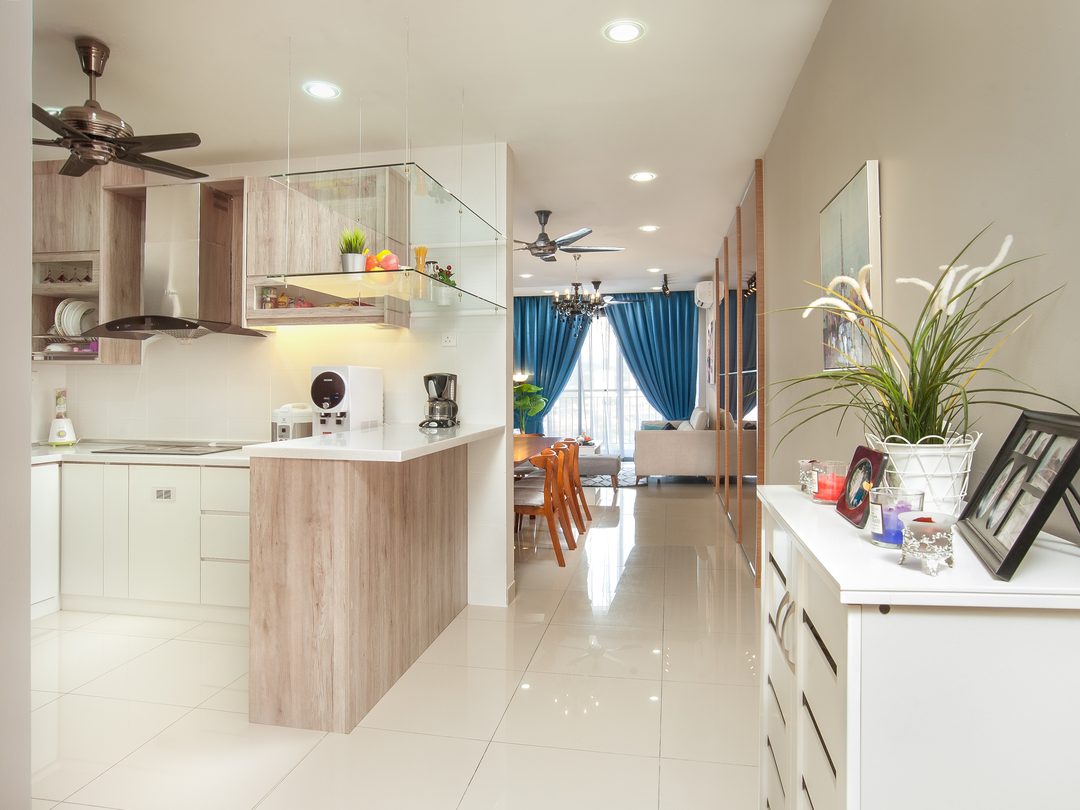
Termite-resistant solid timbers exist too, merbau, Burmese teak and belian among them, but they solve one problem (insects) and not the other (humidity-driven movement), so they still need the same moisture discipline as any other timber in this climate.
Flooring: the material that touches every failure mode at once
Floors deal with humidity from below (slab moisture), spills from above, and, in a wet kitchen or bathroom, standing water on a daily basis.
| Flooring | Installed price (2026) | How it handles Malaysian conditions |
|---|---|---|
| Porcelain / homogeneous tile | Roughly RM5 to RM200+ per sq ft in materials; typical installed jobs run RM11.20 to RM14.80 per sq ft | Under 0.5 percent water absorption. The safest floor for a genuine wet kitchen or bathroom, and the only one on this list that also shrugs off direct heat. |
| Vinyl (LVT) / SPC | Roughly RM3.50 to RM15 per sq ft; SPC typically starts around RM4 per sq ft | Waterproof and termite resistant. Handles spills and ambient humidity without swelling, softer underfoot than tile, and the cheapest genuinely wet-safe option. |
| Laminate | Roughly RM2.50 to RM5 per sq ft | Moisture-resistant top and bottom layers cope with normal humidity, but the fibreboard core underneath still swells if water sits at a seam. Fine for dry rooms, wrong for wet ones. |
| Engineered timber | Roughly RM10 to RM25 per sq ft | Multi-layer construction is far more dimensionally stable than solid timber against Malaysia's humidity swings. The honest way to get a timber look without a warping floor in two years. |
| Solid timber | Roughly RM22 to RM50 per sq ft | Real risk of cupping and gapping as it moves with humidity, unless it is properly acclimatised and sealed before laying. Termite-resistant species reduce one risk, not the other. |
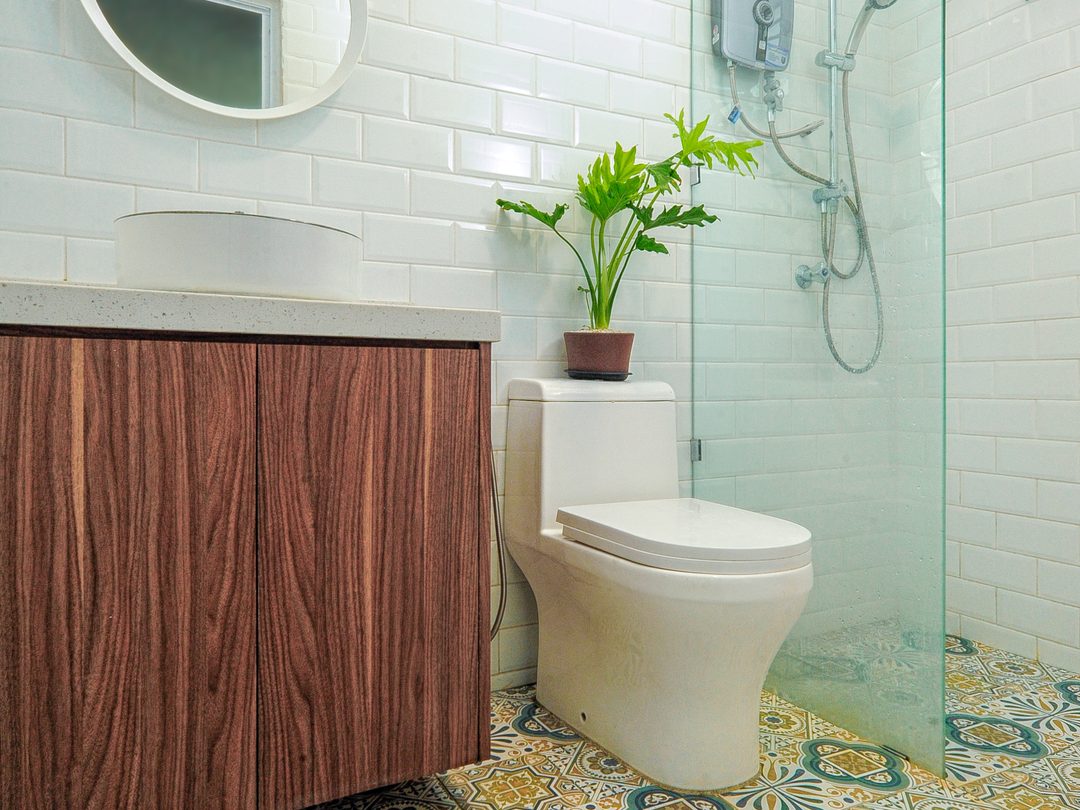
The pattern across every row is the same: the materials that look and feel most like the temperate-market default (laminate, solid timber) are the ones that need the most careful handling here, and the materials built specifically for wet-resistance (tile, vinyl, SPC) simply stop worrying about it.
Countertops, in brief
Kitchen countertops get their own trade-off table, heat resistance from wok cooking, staining from turmeric and soy sauce, and seam visibility all matter more in a Malaysian kitchen than the marketing copy suggests. The short version: quartz is durable but has a real heat ceiling, sintered stone costs more and handles direct heat far better, and granite's main weakness is a porous surface that needs sealing. The full comparison, with 2026 price bands, is in quartz vs sintered stone for a Malaysian kitchen.
Paint: sheen matters more than colour in a humid room
The paint colour is a design decision (covered in our 2026 colour guide); the sheen is a humidity decision. Matt absorbs light and hides wall imperfections well, but it is more porous and less washable, a real liability in a poorly ventilated humid room. Eggshell adds water resistance while staying close to a matt look. Satin and semi-gloss form a harder, less porous film that resists condensation and wipes clean, which is why the rule of thumb in Malaysian kitchens and bathrooms is satin or semi-gloss, not matt. In any room with poor airflow, look for an anti-mould or mildew-resistant emulsion regardless of sheen.
Waterproofing: where it actually has to be there
Waterproofing is invisible once tiled over, which is exactly why it gets skipped on a tight budget and exactly why that is the wrong place to cut.
- Cementitious membrane (roughly RM8 to RM18 per sq ft): rigid and budget-friendly, correct for stable substrates with no meaningful structural movement, a typical bathroom floor or internal wet wall.
- Bituminous torch-on membrane (roughly RM12 to RM22 per sq ft): a mid-range option for broader wet-area coverage.
- Liquid PU / polyurea membrane (roughly RM28 to RM45 per sq ft): elastic, so it bridges hairline movement and cracking, and it copes with complex penetrations, pipes, floor drains, air-conditioning brackets. The right choice for roofs, balconies and parapets, not just a cheaper alternative someone talked you out of.
The honest guidance: a straightforward internal bathroom with no structural movement does not need the premium elastic membrane. A roof, a balcony, or any wet area with pipe penetrations does, and the cementitious option there is the RM20 saving that turns into a RM2,000 ceiling repair once the aircon condensate finds the gap.
How to read a materials list before you sign
- Ask what board is behind the laminate, not just what the door finish is. "HMR" and "MDF" are different products at different prices, and a quote that only names the visible finish is hiding the part that actually determines whether the cabinet survives.
- Ask which rooms get which flooring, and whether the wet kitchen and bathroom floors are actually rated for standing water, not just "moisture resistant."
- Confirm the waterproofing membrane type for every wet area, cementitious or liquid membrane, and how many coats.
- Ask about paint sheen room by room, not just the colour. A colour swatch says nothing about whether the finish will hold up over a shower.
- If termites are a known local issue, ask specifically what is treated and what isn't. Aluminium and tile need no treatment at all; timber and board carcasses do.
None of this changes the headline price much. It changes whether the renovation still looks and functions the way it was meant to in five years, which is the actual point of a full home renovation or a kitchen renovation in the first place.
Sources
Board and moisture-resistance details are drawn from DE Woodpanel Resources on HMR board, Ba Li Kitchen Cabinet's HMR vs HDF vs MDF guide, and Vinawood's 2026 marine plywood buyer's guide. Aluminium cabinet pricing is from Recommend.my. Flooring prices and humidity performance are drawn from Malaysia Best Flooring's 2026 vinyl trends guide, Nature Living's 2026 SPC guide, Netwood's solid vs engineered timber comparison, and Floorbit's wood flooring cost guide. Tile specifications and pricing are from Kimgres's homogeneous tile guide and Recommend.my's tiling cost guide. Paint sheen recommendations are from ClickBina's 2026 paint types guide and Dulux Malaysia's paint finishes guide. Waterproofing membrane types and pricing are from ODSCC's 2026 waterproofing cost guide and Chemind's waterproofing systems overview. Ranges vary between sources and none replaces a scoped quote for a specific property.
Read next: Quartz vs sintered stone for a Malaysian kitchen · Plaster ceiling vs skim coat, and when the cheaper one is fine · Paint colours for Malaysian homes in 2026 · kitchen renovation